|
Molten Salt Reactors
www.MoltenSaltReactors.com
Yes
Nukes!
www.YesNukes.com
(as long as they are MSR
or LFTR!)
Clean Power
Generation Solutions for Commercial, Industrial and Utility Clients
CHP
Systems
* Clean
Power Generation
* Cogeneration
* Demand
Side Management *
EcoGeneration
* Emissions
Abatement
Energy
Master Planning
* Engineering
* Net
Zero Energy *
Power
Purchase Agreements
* Rooftop
PV * Trigeneration
* Waste
Heat Recovery
___________________________________________________
With Natural Gas prices now at < $2.40/mmbtu, our Clean Power Generation plants generate
power for about $0.03/kWh (fuel cost) - with Operations &
Maintenance added in -
that's less than a nickel/kWh - and about 50% to 70% less than your
present electric rates
Our Dispersed
Generation plants
available in Cogeneration
or CHP
System
configuration
and are available in skid-mounted packages in the following sizes:
500 kW * 750
kW * 1 MW
* 2 MW
with optional Selective
Catalytic Reduction
system
which reduce Nitrogen
Oxides to
"Non-detect."
Our Dispersed
Generation plants
are an ideal solution for Electric
Utilities, Electric Co-ops,
Electrical Sub-stations, Hospitals, Food Processing, Universities and Data Centers to
Reduce/Eliminate Blackouts, Electric Grid Supply Problems or other Power Supply Interruptions
Our
Energy
Master Planning
and Demand
Side Management solutions,
coupled with our
Clean
Power Generation
systems will help transform our client's operations, facilities and
bottom-line
by updating their business into a "Net
Zero Energy"
operation and simultaneously provide;
*
Increased power reliability
*
Reduced power and energy expenses
*
The option to tell your electric utility "you're fired!"
*
Reduce or eliminate your emissions & environmental risks
info@MoltenSaltReactors.com
Disclaimer:
None of the information contained within this website constitutes a
recommendation, solicitation or offer by our company or
related companies, to buy or sell any security/securities, or provide
any accounting, financial, investment, legal, or securities advice or
services.
|
Molten Salt Reactors
www.MoltenSaltReactors.com
What are Molten
Salt Reactors?
Molten
Salt Reactors or "MSRs"
are liquid-fueled reactors that can be used for production of electricity,
actinide burning, production of hydrogen, and the production of "fissile
fuels."
Electricity
production and waste "burn-down" are expected to be the primary
missions for the Molten
Salt Reactor.
Fissile,
fertile, and fission isotopes are dissolved in a high-temperature molten
fluoride salt with a very high boiling point (1,400 C) that is both the
reactor fuel and the coolant. The near-atmospheric-pressure molten fuel salt
flows through the reactor core.
Traditional
Molten
Salt Reactor designs have
a graphite core that results in a thermal to epithermal neutron spectrum.
In
the core of the Molten
Salt Reactor is where
fission occurs - within the flowing molten salt which is the "fuel"
and is heated to approximately 700° C., after which it flows into a primary
heat exchanger where the heat is transferred to a secondary molten salt
coolant. The fuel salt then flows back to the reactor core. The clean
salt in the secondary heat transport system transfers the heat from the
primary heat exchanger to a high-temperature Brayton
cycle which converts the
heat energy into electricity. The Brayton
cycle may use either
nitrogen or helium as a working gas.
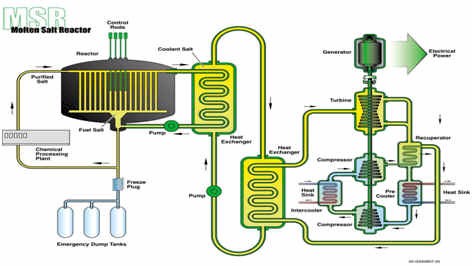
The
picture above from the Department of Energy (www.DOE.gov)
Yes
Nukes!
www.YesNukes.com
(as long as they are MSR or LFTR!)
Energy Cheaper and Cleaner than Coal Through Liquid
Fluoride Thorium Reactors
Imagine, energy that is both cheaper than coal and cleaner than coal - and can
solve more problems than just global warming.
The
Liquid
Fluoride Thorium Reactor
(LFTR) is an alternative energy source that is not well known to the public.
The LFTR uses inexpensive thorium as a fuel, which is transformed to
uranium-233 and through nuclear fission, generates heat and power at a cost
far less than coal
fired power plants.
Environmental Concerns
The rising cost of energy and threat of climate change is a concern to many.
The US annually imports over $400 billion of oil from foreign suppliers - many
from countries whose governments that are not friendly to the U.S.
Global
warming and climate change has been linked to melting glaciers which provides
fresh water to millions of people.
Global
warming and climate change has been linked to the ice melt in both the Arctic
and Antarctic - where much of the ocean's algae is produced and provides the
foundation of the ocean's food chain.
Global warming and climate change is linked to deforestation and
desertification - causing further losses of fresh water supplies.
Global warming and climate change has been linked to declining food/crop
production.
Fisheries are collapsing - some fish such as tuna, cod, swordfish facing
extinction.
24,000 people in the US die annually from particulate emissions from coal
fired power plants.
Global Population
The global population contributes to demand on finite resources. The world's
population of almost 7 billion people is growing and leading to competition
for dwindling food, water, and energy resources that may lead to famine,
plague and eventually wars and world war.
The US and other industrialized nations' birth rates are stable and even
declining - and less than the population replacement rates. Countries that are
prosperous are more sustainable.
Global
prosperity depends on energy. Carbon
Free Energy and Pollution
Free Power from Clean
Power Generation plants
and renewable energy
technologies are far superior than any fossil fuel as well as nuclear (fue)
better for all living things and a healthy planet. And global prosperity will
thrive when Carbon
Free Energy is generated
from technologies that are "cheaper
than coal."
Electrical
energy provides power for clean water supplies, sanitation, lighting,
refrigeration, cooking, communications, healthcare/hospitals and
schools/education. It has been shown that when a country has at least 2,000
kwh per year/per capita, that there is prosperity for the people in that
country and the population stabilizes. The U.S. generates approximately
12,000 kWh per year, per household.
Economists
study the relationship between the economic damage from carbon taxes (Cap
and Trade) against the
economic damage done from greenhouse
gas emissions and
anthropogenic climate change. Raising the carbon tax too fast will damage the
economy. Europe’s $50 billion Cap
and Trade has not yet
reversed emissions growth of greenhouse
gas emissions. And,
developing nations will not accept carbon taxes that limit their economic
growth.
Even
global warming contrarians can support the economic benefits of energy that is
cheaper
than coal.
The Liquid
Fluoride Thorium Reactor
solves many of the problems highlighted above by:
• Generating Carbon
Free Energy and Pollution
Free Power at costs that
are "cheaper
than coal."
•
Generating power with zero greenhouse
gas emissions.
•
Enabling populations of developing nations to afford the energy they need for
sustainable growth and smaller, sustainable populations.
The
History of the Liquid
Fluoride Thorium Reactors
The Liquid
Fluoride Thorium Reactor
uses inexpensive and abundant thorium as its fuel. Thorium is transformed into
uranium-233 which generates heat and power via nuclear fission.
The
thorium and uranium are dissolved in molten salt which simplifies fueling and
waste removal when compared to today's nuclear
power plants.
Environmental LFTR Advantages
1. Liquid
Fluoride Thorium Reactors
generate Carbon
Free Energy and Pollution
Free Power at costs that
are cheaper
than coal.
This
would cause the closings of coal
fired power plants and
the end of their dumping of millions of tons of greenhouse
gas emissions into our
atmosphere every year..... not to mention their hundreds of thousands of tons
of mercury emissions they are dumping into our environment that is poisoning
our planet and all living things.
2.
Liquid
Fluoride Thorium Reactors
produce less hazardous waste than coal or other forms of nuclear energy and
the radioactive waste from Liquid
Fluoride Thorium Reactors
lasts 1/100th the time of nuclear waste from today's nuclear
power plants.
3. Ending the pollution from coal
fired power plants and
associated coal particulates would save 24,000 lives annually in the US and
thousands of people in China and the rest of the world.
4.
The fuel used in Liquid
Fluoride Thorium Reactors
is inexhaustible and inexpensive.
One ton of thorium costs $100,000 and is enough to generate 1 GW electricity
per year - which would be all the power a city the size of San Francisco
needs.
Technical Advantages of Liquid
Fluoride Thorium Reactors:
1. Liquid
Fluoride Thorium Reactors
have no refueling outages, with continuous automated refueling and continuous
automated waste fission product removal.
2. Liquid
Fluoride Thorium Reactors
can change power output to satisfy electric demand, for both baseload coal
fired power plants and nuclear
power plants and replace
entirely expensive natural gas "peaker" plants.
3. Liquid
Fluoride Thorium Reactors
operate at high temperature for 50% thermal/electrical conversion efficiency,
thus needing only half of the cooling required by today's coal
fired power plants and nuclear
power plants cooling
towers.
4. Liquid
Fluoride Thorium Reactors
are air cooled, critical for the West and Southwest U.S. as well as many
developing countries where water is scarce.
5. Liquid
Fluoride Thorium Reactors
have low capital costs because they do not need massive pressure vessels or
containment domes.
Because Liquid
Fluoride Thorium Reactors
have compact heat exchangers and utilize Brayton
Cycle turbines, their
cooling requirements are halved and safety is increased, when compared with
today's nuclear
power plants.
6. A new Liquid
Fluoride Thorium Reactor
will cost $200 million for a 100 MW power plant which means they are
affordable.
7.
Liquid
Fluoride Thorium Reactors
can also make hydrogen
fuel for helping develop
the hydrogen economy.
8. Liquid
Fluoride Thorium Reactors
are intrinsically safe
because overheating expands the fuel salt past criticality.
Because Liquid
Fluoride Thorium Reactor
fuel is not pressurized and because total loss of power or control will allow
a freeze-plug to melt, gravitationally draining all fuel salt into a dump
tray, where it cools convectively.
9. 100% of Liquid
Fluoride Thorium Reactor
thorium fuel is burned, compared to 0.7% of uranium burned in today's nuclear
reactors.
10. Liquid
Fluoride Thorium Reactors
are proliferation resistant, because their U-233 fuel also contains U-232
decay products that emit strong gamma radiation, hazardous to any bomb
builders who might somehow seize control of the power plant for the many
months necessary needed to extract uranium.
11. Liquid
Fluoride Thorium Reactors
plutonium and other actinides remain in the salt until it is fissioned -
unlike today's solid fuel reactors, which must refuel long before these
long-lived radiotoxic elements are consumed, because of radiation and thermal
stress damage to the zirconium-encased solid fuel rods.
12. No plutonium or other fissionable material is ever isolated or transported
to or from the Liquid
Fluoride Thorium Reactors
(except for importing spent nuclear fuel waste used to start the Liquid
Fluoride Thorium Reactor).
Liquid
Fluoride Thorium Reactor
Challenges
There
is almost no political awareness of the thorium/uranium fuel cycle.
James
Hansen, the well-known climate scientist from NASA and Columbia professor,
recommends and supports the deployment of Liquid
Fluoride Thorium Reactor
technology for generating "carbon
free energy."
At
present, there is no R&D support or funding for Liquid
Fluoride Thorium Reactors.
R&D
is needed now for supporting Liquid
Fluoride Thorium Reactor
technology.
The
Nuclear Regulatory Commission would need to learn Liquid
Fluoride Thorium Reactor
technology in order to license and regulate it.
______________________________________________________
In affiliation with an energy investment banking
firm and Fortune 250 engineering company, we
are forming a new
Energy Service Company (ESCO) to provide ESCO solutions,
including; demand
side management, energy
efficiency measures and clean power generation solutions for commercial,
industrial and utility clients. Our company will reduce our
client's energy expenses, while increasing their power reliability and reducing or
eliminating their environmental risks and
liabilities. Our company's clean power generation
systems and ESCO solutions will upgrade practically any company's
facilities into a "net
zero energy" solution providing the business with the ability to
operate without connection to the electric grid.
For qualified clients, we will
provide the optimum solutions and services, with little to no expense,
with an Energy
Services Agreement or Power
Purchase Agreement that includes emissions
engineering services and "greenhouse
gas reporting" services, now required for many of our clients.
_______________________________________________________
The
Business Model of "Central
Power Plants" is a failed model due to the following failures of Central
Power Plants and the electric utilities and other companies that own
or operate them.
Central
Power Plants are:
-
Highly
inefficient
-
Highly
polluting - generating hazardous air pollutants, mercury and greenhouse gas
emissions, all of which are now regulated, and are now, or will be heavily
taxed.
-
Consume
inordinate amounts of fuel.
-
Waste
inordinate amounts of useful heat energy.
-
Require
as many as 5-10 years to begin construction of new central power plants.
-
Typically
owned by highly inefficient, heavily regulated electric utility companies
that are massive bureaucracies requiring significant amounts of capital that
are passed on to customers
-
Located
as far as 50 miles, to 150 miles from the load center, or market
The alternative to Central Power
Plants are "Dispersed Generation"
power and energy systems.
Dispersed Generation
power and energy systems are;
-
At
approximately 90% system efficiency, Dispersed Generation power and energy
systems are about 250% more efficient than
Central Power
Plants.
-
Highly
efficient
-
Generate
50% to 100% fewer emissions
-
Consume
50% to 90% less fuel
-
Located
at the load center, i.e. customer's location, where the "waste
heat" energy can be recovered and used by the client.
-
Can
be permitted and built in less than 12-18 months
NOTE:
The above can be affected by a number of variables can affect the above.
We can provide the turnkey solution and installation for clients in the 500 kW
to 10 MW range. Our front-end engineering design and economic analysis
determines the optimum solution for our clients, that takes into account the
client's location, operation/business and how the client uses power and energy
and their existing electric and natural gas rates. All of which play an
important role regarding the client's return on investment.
______________________________________________________
What is "Dispersed Generation"?
Dispersed
Generation is similar to Decentralized Energy - which is the opposite of
"centralized energy." Dispersed
Generation is defined as the efficient
deployment of clean, efficient and renewable power, which are located near a
"load center" and are in the 10 MW
to 150 MW to as much as 300 MW range.
Our
new company is focused in solving power problems in the 1 MW to 30 MW
range as well as providing solutions for the "demand
side management" market opportunities.
The Problems and Opportunities with USA's Present Electrical Grid, Power Supply,
Power Generation, "Central
Power Plants" and "Centralized Energy."
-
Central
power plants are extremely
inefficient, costly and generate significant amounts of pollution, including
mercury, hazardous
air pollutants, nitrogen
oxides and greenhouse
gas emissions.
-
Siting
of new central
power plants require
as many as 10 years to receive approvals and permits. Our company's
Founder and Chairman has developed or consulted in new power generation
assets, wherein our/their highly-efficient "Dispersed
Generation" assets received
permits in well under 12 months.
-
Building
new central
power plants are
expensive - as much as $4500/kW.
-
Central
power plants are
not as "integrated" or connected to the electric grid of a load
center, as a Dispersed
Generation power
plant is. In addition, due to their size, high power output and
"profile," central
power plants are more
likely to be a target of criminal activity than Dispersed
Generation plants.
-
The
"electric utility" business model based on generating power - and
then re-selling it - from highly inefficient central
power plants -
is a failed business model. Highly efficient, integrated and locally-sited Dispersed
Generation plants
are the future of power generation.
-
Even
new, "highly-efficient" central
power plants -
with efficiencies of 60% - are still "highly inefficient" when
compared with our 90% to 92% efficient Dispersed
Generation plants.
-
According
to the EIA (Department of Energy), America's power and energy sector
contributes about 1/2 trillion dollars every year to the U.S. gross domestic
product (GDP).
-
Demand
for new electric electric generation is expected be more than > 40% by
2025.
Dispersed Generation power
plant's multiple advantages over Central
Power Plants:
Our Dispersed
Generation power plants provide clean, renewable power for cities and
other load centers that eases the congestion of the grid and prevents blackouts
and brownouts. Our
company plans to develop Dispersed
Generation assets located near load centers - where we design, build, own, operate and maintain
natural gas fueled CHP
systems.
We
provide generator
sales and service, energy and power engineering services and energy
master planning services. This includes custom-packaging of engines
and generators (Engine
Generator Sets) such as the one below, to optimize the return on
investment for our customers.
We
can design and custom-package an onsite
power generation system that is tailored to your facility's specific
power and energy previous 12-36 months historical energy use. With our client's
input, we also provide projections into future energy use and then
custom-package a power and energy solution that:
-
increases
power reliability
-
reduces
energy expenses
-
increases
energy efficiency
-
reduces/eliminates
emissions
-
reduces
or eliminates the power supply / blackout problems
-
may
pay for itself in less than 36 months!
Call/email
us if you are seeking an Energy
Master Plan or a customized onsite
power generation solution for your facility's power and energy
requirements - or to tour of one of the facility's where we can design and build
a customized Engine
Generator Set or CHP
system for your business.
_______________________________________________________
Running
on "green fuel" such as Biomethane,
B100 Biodiesel,
Synthesis Gas
or natural gas, our CHP
Systems are the greenest "clean
power generation" systems available.
Our
clean
power generation systems are a superior
"micro-grid"
and demand
side management solution for data centers,
hospitals, universities, municipal
utility districts and new real estate
developments/subdivisions seeking "net
zero energy" solutions.
With Natural Gas prices now running well below $3.00/mmbtu, and more
recently in March 2012, below $2.40/mmbtu, our Clean Power Generation plants generate
power for a fuel cost at about $0.03/kWh. With operations &
maintenance added in - we generate power for less than a nickel or
$0.05/kWh - or, anywhere from 50% to 75% less than your
present electric rates.
We
also provide energy independence from the "dirty" power grid with
its high unreliability, black-outs and sky-rocketing electric power
prices.
Our "Integrated" CHP
Systems (Cogeneration
and Trigeneration)
Plants
Have Very High Efficiencies, Low Fuel Costs & Low Emissions
The Effective Heat Rate is Approximately
4100 btu/kW & System Efficiency is 92% Plant.
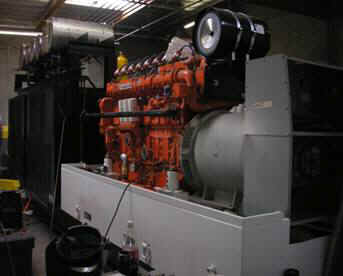
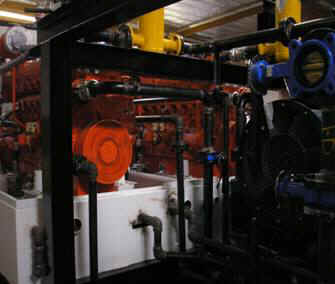
The
CHP System
below is Rated at 900 kW and Features:
(2) Natural Gas Engines @ 450 kW each on one Skid with Optional
Selective Catalytic Reduction system that removes Nitrogen
Oxides to "non-detect."
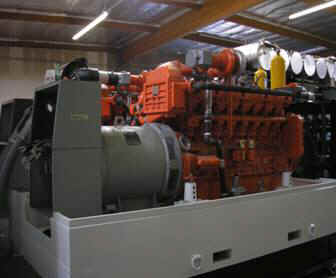
Our CHP Systems
may be the best solution for your company's economic and environmental
sustainability as we "upgrade" natural gas to clean power with our clean
power generation solutions.
Our Emissions
Abatement solutions reduce Nitrogen
Oxides to "non-detect" which means our Trigeneration
energy systems can be installed and
operated in most EPA non-attainment regions!
_______________________________________________________

______________________________________________________
About
us:
We
develop clean power generation assets. As a developer, we oversee and
manage all aspects of the clean power project, from project inception,
engineering and economic feasibility, Engineering
Procurement Construction, Power
Purchase Agreement, fuel procurement,
utility interconnection, off-take agreements, through commissioning and long
term service agreement. We also provide the following products or consulting
services;
and
other engineering and project development services.
Our work is
performed on a strict adherence to "vendor-neutrality." We are
client and project focused and seek to maximize our client's return on their investment
while simultaneously minimizing their operational expenses and environmental
exposure.
For
qualified clients we will design, build, finance, own, operate and
maintain a new:
Clean
Power Generation
Cogeneration
Onsite
Power Generation
Organic
Rankine Cycle
Trigeneration
Waste
Heat Recovery
energy
system, through a Power
Purchase Agreement that guarantees
a minimum 10% reduction in our client's energy expenses.
(NOTE: Engineering and related interim project development
expenses may be at client's expense but will be
refunded
at the close of Power
Purchase Agreement or other project financing. Some of our
engineering
and EPC services
may be provided by one of our Top-ranked ENR Engineering
Procurement Construction partner companies.)
To receive a preliminary no-obligation review of your energy, engineering or
project plans,
send an introductory email to us at the following email address:
info@MoltenSaltReactors.com
______________________________________________________
What
is Backup Power and a Backup
Power Supply?
If
you live in an area where there has been, or could be impacted with power
blackouts, brownouts, rolling blackouts or intermittent power, you need a backup
power supply!
If
you live or work in an area that has had, or could have; earthquakes,
hurricanes, tornados, forest fires, thunderstorms, snow/ice storms or floods,
you probably need a backup power supply!
The
electric grid provides power at a reliability factor of about 99.97% - however,
if your your home, business, hospital, food/agricultural, restaurant, or other
type of facility is "power critical" or power sensitive , you need a
reliable backup power supply!
A
backup power
supply is comprised of a generator with an automatic transfer switch.
Buying
a generator for standby power can be the first step to regaining control over
protecting your family and possessions from harm. And, using a generator is as
simple as operating any household appliance. After you have selected a
generator, here are a few tips that can help you keep power through the storm.
We
can help you select the right backup
power supply for your business or facility. Call/email us for more
information.
What
is "Cogeneration"?
Did
you know that 10% of our nation's electricity now comes from "cogeneration"
plants?
And
because cogeneration
is so efficient, it saves its customers up to 40% on their energy expenses, and
provides even greater savings to our environment through significant reductions
in fuel usage and much lower greenhouse
gas emissions.
Cogeneration
- also known as “combined
heat and power” (CHP), cogen, district energy, total energy, and
combined cycle, is the simultaneous production of heat (usually in the form of
hot water and/or steam) and power, utilizing one primary fuel such as natural
gas, or a renewable fuel, such as Biomethane,
B100 Biodiesel,
or Synthesis Gas.
Cogeneration
technology is not the latest industry buzz-word being touted as
the solution to our nation's energy woes. Cogeneration
is a proven technology that has been around for over 120 years!
Our
nation's first commercial power plant was a cogeneration
plant that was designed and built by Thomas Edison in 1882 in New York. Our
nation's first commercial power plant was called the "Pearl Street
Station."
What
is "Decentralized Energy"?
Decentralized Energy
generates the power and energy that a residential, commercial, municipal or
industrial customer needs, onsite, for their home or business.
Today's
electric utility industry was "born" in the 1930's, when fossil fuel
prices were cheap, and the cost of wheeling the electricity via transmission
power lines, was also cheap. "Central" power plants could be
located hundreds of miles from the load centers, or cities, where the
electricity was needed. These extreme inefficiencies and cheap fossil fuel
prices have added a considerable economic and environmental burden to the
consumers and the planet.
Centralized
energy is found in the form of electric utility companies that generate power
from "central" power plants. Central power plants are highly
inefficient, averaging only 33% net system efficiency. This means that the
power coming to your home or business - including the line losses and
transmission inefficiencies of moving the power - has lost 75% to as much as 80%
energy it started with at the "central" power plant. These
losses and inefficiencies translate into significantly increased energy expenses
by the residential and commercial consumers.
What is Demand
Side Management?
According
to the Department of Energy, Demand
Side Management or "DSM," refers to those "actions
taken on the customer's side of the meter to change the amount or timing of
energy consumption.
Utility
DSM programs offer a variety of measures that can reduce energy consumption and
consumer energy expenses. Electricity DSM strategies have the goal of maximizing
end-use efficiency to avoid or postpone the construction of new generating
plants." Therefore, Demand
Side Management, is the process of managing the consumption of
energy, generally to optimize available and planned generation resources.
While not every business is a candidate for onsite
power generation, such as an onsite cogeneration
or trigeneration
energy system, however, your company may be a great candidate for other
energy-saving solutions. One of these is Demand
Side Management or "DSM". We help commercial, industrial
and utility clients by providing cost-effective Demand
Side Management solutions.
What
are "Distributed
Energy Resources"?
Distributed
Energy Resources (DER) are small, modular, energy generation and
energy storage systems and technologies that provide electric capacity or
thermal energy (i.e. hot water, chilled water, steam) where and when a
commercial or industrial client requires.
Typically,
Distributed
Energy Resources generate less than 10 MW (megawatts).
Distributed
Energy Resources are
highly flexible and adaptable, and can therefore, be sized
to meet any customer's specific power and energy requirements, at the customers
facility or business.
As
they are flexible and adaptable for nearly any customer's specific requirements,
DER systems can be installed to operate with the local electric grid, or be
designed and installed "grid-free" without connecting to the electric
grid in island or stand-alone mode.
Distributed
Energy Resources' technologies include
those that end America's dependence on foreign oil, and therefore include;
How are Distributed
Energy Resources systems
and technologies used?
Distributed
Energy Resources systems can be used in several ways including
managing/reducing energy expenses and ensuring reliable power by augmenting your current energy services.
Distributed
Energy Resources systems also enable a facility to operate independently
of the electric power grid, whether by choice or out of necessity.
Distributed
Energy Resources improve
a customer's "carbon footprint" by significantly reducing their
greenhouse gas emissions and increasing overall energy efficiency.
Utilities can use
Distributed
Energy Resources technologies to delay, reduce, or even eliminate the need to obtain additional
power generation, transmission, and distribution equipment and infrastructure.
At the same time, DER systems can provide voltage support and enhance local reliability.
Distributed
Energy Resources are
an ideal "demand
side management" solution.
How do I know if Distributed
Energy Resources systems
and technologies are the right choice for my facility?
In today's economy and increasing pressure for businesses to reduce their
greenhouse gas emissions, there are several economic and environmental factors
making Distributed
Energy Resources a
serious option and alternative. These include the high prices
of electricity from the electric grid/electric utility company as well as high
natural gas costs from the natural gas utilities. Uncertainties regarding
foreign oil, "peak oil" and the ever-increasing potential for disruptions
in electricity service and oil from foreign oil countries are causing managers
and CEO's of businesses to consider alternatives to traditional energy providers and for new ways to supplement
or augment their present energy situation and present suppliers.
This is particularly crucial where a facility’s energy-producing and electric
grid infrastructure are aging. The performance, cost, and availability of
DER technologies have all been improving steadily over the past several years.
New Distributed
Energy Resources systems
and technologies are significantly more efficient than
even ten years ago. Replacing or upgrading your present energy problems
with Distributed
Energy Resources may pay for itself sooner
than expected.
Energy security
as well as price of energy has never been a greater concern to businesses and
their managers/CEO's and CFO's. Distributed
Energy Resources systems can provide
the requisite power and energy needed for mission-critical loads, reduce hazardous or costly power outages, and
diversify the local energy supply.
What
is an Energy
Master Plan?
Now
that greenhouse
gas reporting is a vital and urgent issue for thousands of business
in the U.S., and as they will now have to report their greenhouse
gas emissions to the EPA. Our Energy
Master Plan format has been updated to include "emissions
abatement" strategies.
Our
energy
master planning services are also focused in a broader focus as well
for our customers interested in sustainable energy solutions for reducing their
carbon footprint, fossil fuel intensity, total energy expenses, potential for
blackouts as well as their overall vulnerabilities to being "tied" to
their specific electric utility. Our energy
master planning services also improve
the air quality and work environment for all of our client's stakeholders
through our focus on triple bottom-line results.
Our
energy
master planning services are not solely
focused on our client's facilities' "demand side" of the energy
equation, but also how our client's energy is acquired and purchased on their
supply side. This understanding that supply and demand side planning is equally
important enabled a holistic review of how CUMC uses and pays for energy and the
impact of these sources on the environment.
Our
energy master
plan begins with a review of our
client's past three years electricity, natural gas, oil, waste and water
expenditures and depending on the final requirements and project scope
authorized by the client, will typically include;
_______________________________________________________
What
is "Trigeneration"?
Trigeneration
is the simultaneous production of three forms of energy - typically, Cooling,
Heating and Power - from only one fuel input. Put another way, our trigeneration
power plants produce three
different types of energy for the price of one.
Trigeneration
energy
systems can reach overall system efficiencies of 86% to
93%. Typical "central" power plants, that do not need the heat
generated from the combustion and power generation process, are only about 33%
efficient.
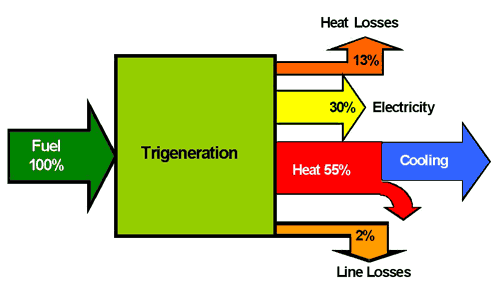
Trigeneration
Diagram & Description
Trigeneration Power Plants' Have the Highest System Efficiencies and are
About 300 % More Efficient than Typical Central Power Plants
Trigeneration
plants are installed at locations that can benefit from all three forms of
energy. These types of installations that install trigeneration
energy systems are called "onsite power generation" also referred to as
"decentralized energy."
One
of our company's principal's first experience with the design and development of
a trigeneration power plant was the trigeneration
power plant installation at Rice University in 1987 where
our trigeneration
development team started out by conducting a
"cogeneration" feasibility study.
The EPC
contractor that Rice University selected installed the trigeneration
power which included a 4.0 MW
Ruston gas turbine power plant, along with waste heat recovery
boilers and Absorption Chillers.
A "waste heat recovery
boiler" captures the heat from the exhaust of the gas turbine. From
there, the recovered energy was converted to chilled water - originally from (3)
Hitachi Absorption Chillers - 2 were rated at 1,000 tons each, and the third
Hitachi Absorption Chiller was rated at 1,500 tons. The Hitachi Absorption Chillers
were replaced shortly after their installation by the EPC
company. The first trigeneration
plant at Rice University was so successful, they added a second 5.0 MW trigeneration
plant so today, Rice University is now generating about 9.0 MW of
electricity, and also producing the cooling and heating the university needs
from the trigeneration
plant and circulating the trigeneration
energy around its
campus.
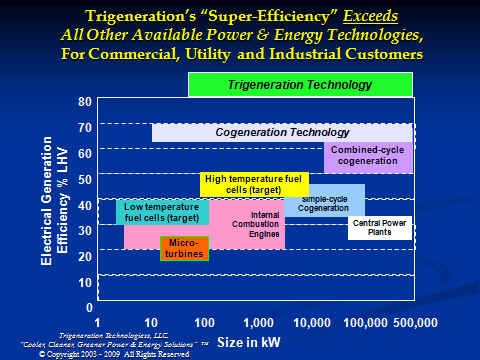
Trigeneration Chart
Trigeneration's
"Super-Efficiency" compared
with other competing technologies
As you can see, there is No Competition for Trigeneration!
Our trigeneration power plants are the ideal onsite power
and energy solution for customers that include: Data
Centers, Hospitals, Universities, Airports, Central Plants, Colleges
& Universities, Dairies, Server Farms, District Heating & Cooling
Plants,
Food Processing Plants, Golf/Country
Clubs, Government Buildings, Grocery Stores, Hotels, Manufacturing
Plants,
Nursing Homes, Office
Buildings / Campuses,
Radio Stations, Refrigerated
Warehouses,
Resorts,
Restaurants,
Schools, Server Farms, Shopping Centers, Supermarkets, Television
Stations, Theatres and Military Bases.
At
about 86% to 93% net system efficiency, our trigeneration
power plants are about 300% more efficient at providing energy than your current
electric utility. That's because the typical electric utility's power plants are
only about 33% efficient - they waste 2/3 of the fuel in generating electricity
in the enormous amount of waste heat energy that they exhaust through their
smokestacks.
Trigeneration
is defined as the simultaneous production of three energies: Cooling,
Heating and Power.
Our trigeneration
energy systems use the same amount of fuel
in producing three energies that
would normally only produce just one type of energy. This means our customers
that have our trigeneration
power plants have significantly
lower energy expenses, and a lower carbon footprint.
Waste
Heat Recovery in Cogeneration
and
Trigeneration power and energy
systems
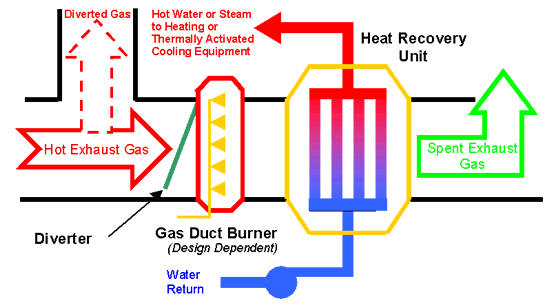
In
most cogeneration and
trigeneration
power and energy systems, the exhaust gas from the electric generation
equipment is ducted to a heat exchanger to recover the thermal energy in the
gas. These heat exchangers are air-to-water heat exchangers, where the exhaust
gas flows over some form of tube and fin heat exchange surface and the heat
from the exhaust gas is transferred to make hot water or steam. The hot water
or steam is then used to provide hot water or steam heating and/or to operate
thermally activated equipment, such as an absorption
chiller for cooling or a desiccant dehumidifer for dehumidification.
Many
of the waste heat recovery
technologies used in building cogeneration and
trigeneration
systems require hot water, some
at moderate pressures of 15 to 150 psig. In the cases where additional steam
or pressurized hot water is needed, it may be necessary to provide
supplemental heat to the exhaust gas with a duct burner.
In
some applications air-to-air heat exchangers can be used. In other instances,
if the emissions from the generation equipment are low enough, such as is with
many of the microturbine technologies, the hot exhaust gases can be mixed with
make-up air and vented directly into the heating system for building heating.
In
the majority of installations, a flapper damper or "diverter" is
employed to vary flow across the heat transfer surfaces of the heat exchanger
to maintain a specific design temperature of the hot water or steam generation
rate.
Typical
Waste Heat Recovery
Installation
In some cogeneration and
trigeneration
designs, the exhaust gases can be used to activate a
thermal wheel or a desiccant dehumidifier. Thermal wheels use the exhaust gas
to heat a wheel with a medium that absorbs the heat and then transfers the
heat when the wheel is rotated into the incoming airflow.
A
professional engineer should be involved in designing and sizing of the Waste
Heat Recovery section. For a proper and economical operation, the design of
the heat recovery section involves consideration of many related factors, such
as the thermal capacity of the exhaust gases, the exhaust flow rate, the
sizing and type of heat exchanger, and the desired parameters over a various
range of operating conditions of the cogeneration
or trigeneration
system — all of which
need to be considered for proper and economical operation.
The
Market and Potential for Waste Heat
Recovery technologies and solutions
There
are more than 500,000 smokestacks in the U.S. that are "wasting" heat,
an untapped resource that can be converted to energy with Waste
Heat Recovery technologies.
About
10% of these 500,000 smokestacks represent
about 75% of the available wasted heat which has a stack
gas exit temperature above 500 degrees F. which could generate approximately
50,000 megawatts of electricity annually and an annual market of over $75 billion in gross
revenues before tax incentives and greenhouse
gas emissions credits.
Waste
Heat Recovery technologies represent the least cost solution which provides
the greatest return on investment, than any other possible green energy
technology or "carbon free energy"
opportunity!
____________________________________________________
What
is "Decentralized
Energy"?
Decentralized
Energy is the
opposite of "centralized energy." Decentralized
Energy - also referred to as "dispersed
generation,"
is the preferred "onsite
power generation" solution
wherein clean power and energy is generated
at the location the power and energy is needed.
Today's
electric utility industry was "born" in the 1930's, when fossil fuel
prices were cheap, and the cost of wheeling the electricity via transmission
power lines, was also cheap. "Central" power plants could be located
hundreds of miles from the load centers, or cities, where the electricity was
needed. These extreme inefficiencies and cheap fossil fuel prices have added a
considerable economic and environmental burden to the consumers and the planet.
Centralized
energy is found in the form of electric utility companies that generate power
from "central" power plants. Central power plants are highly
inefficient, averaging only 33% net system efficiency. This means that the power
coming to your home or business - including the line losses and transmission
inefficiencies of moving the power - has lost 75% to as much as 80% energy it
started with at the "central" power plant. These losses and
inefficiencies translate into significantly increased energy expenses by the
residential and commercial consumers.
Decentralized Energy is the Best Way
to Generate Clean and Green Energy!
How
we make and distribute electricity is changing!
The
electric power generation, transmission and distribution system (the electric
"grid") is changing and evolving from the electric grid of the 19th
and 20th centuries, which was inefficient, highly-polluting, very expensive and
“dumb.”
The
"old" way of generating and distributing energy resembles this slide:
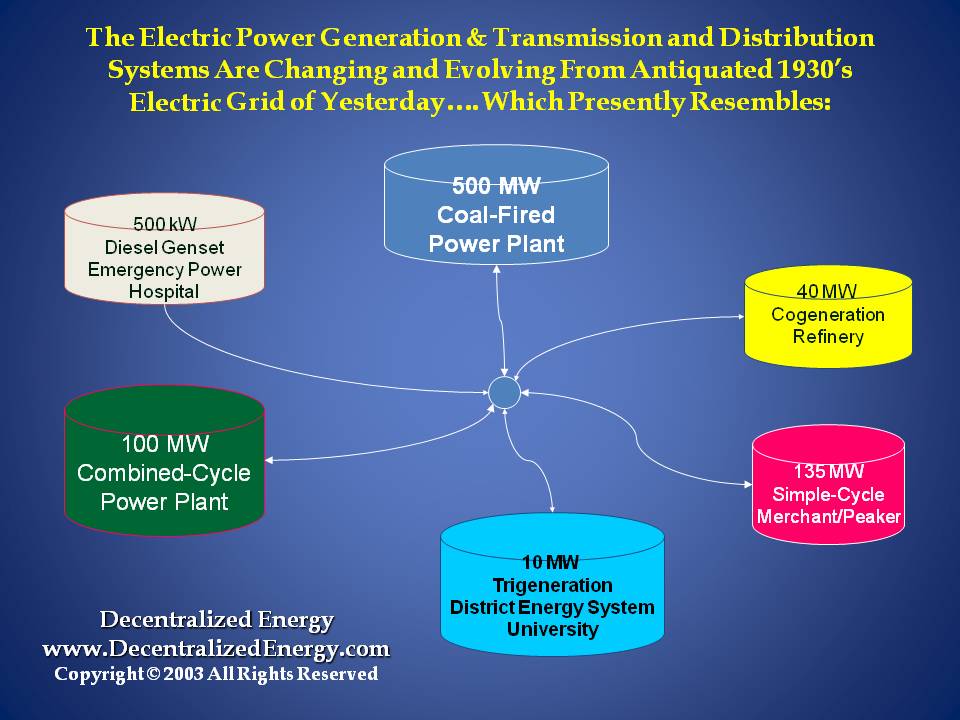
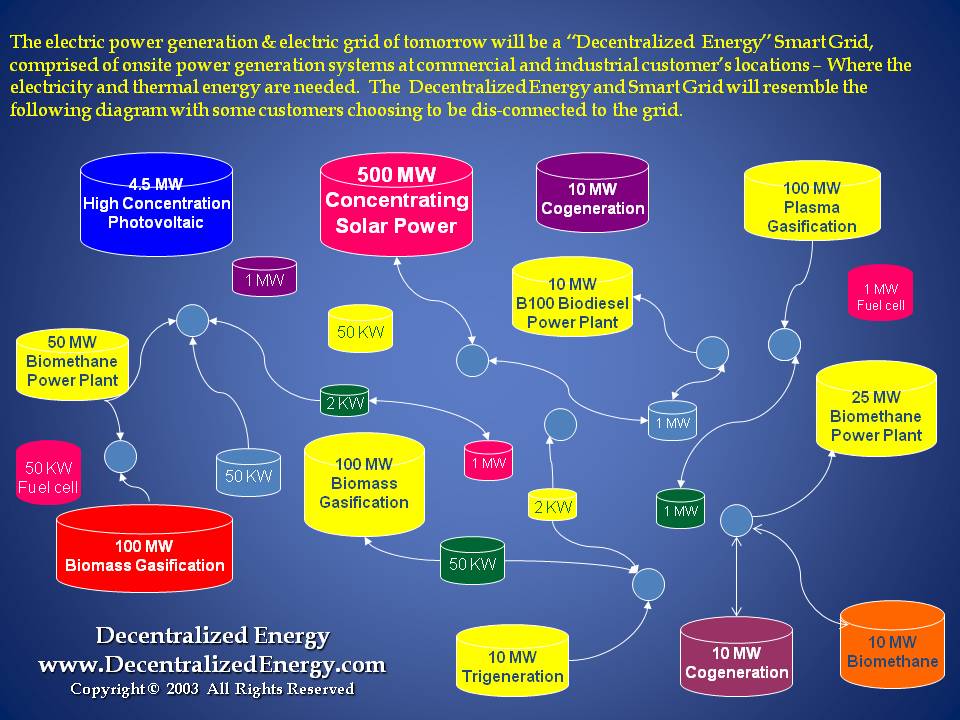
The electric grid of the 21st century (see slide below) will be Decentralized,
Smart, Efficient and provide "carbon
free energy" and “pollution
free power” to customers who remain on the electric grid. The
electric grid of the future will be comprised of both Onsite
Power Generation plants
that are fueled/powered with natural gas and renewable energy technologies such
as;
Biomass
Gasification, Biomethane,
Concentrating
Solar Power, B100 Biodiesel,
Distributed
PV, EcoGeneration Systems,
Geothermal
Power Plants, Rooftop
PV, Synthesis Gas,
and Solar Cogeneration
and Solar Trigeneration
energy systems for Net
Zero Energy
buildings. Some
customers will choose to dis-connect from the grid entirely.
(Electric grid represented by the small light blue circles in the slide below.)
The
transmission grid will be upgraded to a "Unified
Smart Grid"
with green electrons now being wheeled via "High
Voltage Direct Current."
Typical
"central" power plants and the electric utility companies that own
them will either be shut-down, closed or go out of business due to one or more
of the following:
Decentralized
energy, carbon
free energy, clean
power generation and
pollution
free power technologies ARE the future
- whether the utility giants recognize this fact or not. These green and
sustainable energy technologies will reduce, and one day eliminate America's
dependence on foreign oil - making America energy independent while reducing and
eliminating Greenhouse
Gas Emissions - and could mean the end
of central
power plants as
well as the utility companies that own and operate them!
_______________________________________________________
Hubbert's
Peak Oil Predictions Now Proving True?
Marion
King Hubbert was a geologist and scientist who worked at Shell Oil company's
research lab in Houston, Texas. Hubbert made several important contributions to
geology, geophysics and petroleum geology. Hubbert is most recognized for the
"Hubbert Curve" and " Hubbert Peak Theory" which is now
referred to as " Peak Oil.
Hubbert's
life work determined that the world has a finite amount of petroleum that can be
produced. (Similarly, there is a finite amount of coal.) Many scientists and
engineers believe we have reached Hubbert's "peak oil" limit.
Hubbert's espouses that when 50% of domestic crude oil production has been
reached, that there will be such significant upward demand on prices of the
limited supplies of oil production, that the U.S. economy will experience severe
economic, social, and political turmoil.
Hubbert's
Peak Oil predictions have proven to be true and this is validated as the U.S. in
the early 1970's produced about 60% of its' oil demand and imported 40%. That
equation has flipped since then, because our domestic oil production has been on
the decline since 1970, so now, due to our declining domestic oil production, we
have to import 60% of our oil supplies, to meet our country's oil/energy
demands.
The
Next Oil Shock Could be the "mother" of All Oil Shocks
How
severe our economic calamity and next "oil shock" will depend upon a
number of factors, including when this occurs, as well as the following:
1.
the dependence of the individual country upon its own crude oil production to
meet its energy needs and to subsidize consumer imports;
2.
the rate of relative decline in crude oil production;
3.
the degree of difficulty encountered in replacing missing energy inputs;
4.
the degree to which our country had prepared in advance for this inevitable
geological and economic calamity.
Examples of past "oil shocks" and the economic and political
calamities that followed:
United States: Our peak crude oil production of domestic oil occurred in 1970;
the first "oil shock" and oil crisis followed in 1973 with the
Arab/OPEC Oil Embargo.
Iran:
Their peak crude oil production occurred in 1974; They had their islamic
revolution 1979 that overturned government and replaced it with radical islam.
Soviet
Union: Their peak crude oil production was in 1989; what happened next?
Their country disintegrated and the collapse of the Soviet Union followed in
1991.
Indonesia: Their peak crude oil production was in 1991; their financial and
government crisis followed in 1997.
Iraq:
Iraq's crude oil production was in 1989; they then invaded Kuwait (for their
oil) in 1991.
Using
Mr. Hubbert's predictions, that beginning around 2000 we would see peak (global)
oil production, then, if the country's not weaning themselves off of their oil
addiction, and had not begun making the switch to renewable energy, that the
negative economic and political calamities would soon follow, including
ever-increasing prices of energy that is from fossil fuels.
Now
is the time to begin weaning ourselves off of fossil fuels and making the
transition to and increasing the use of renewable energy. If you don't believe
in climate change, or global warming, GREAT! Join us in the switch to renewable
energy and a fossil-free economy!
______________________________________________________
America's
Clear and Present Danger
America
Has INCREASED its' Dependence on Foreign
Sources of Energy by 50% Since 1973.
America
is even more "addicted" to foreign oil today, than we were in 1973 -
1974 when OPEC, Saudi Arabia and other suppliers from the Middle-East stopped
selling us their fossil fuels, and created a significant blow to our economy.
According
to the CIA Fact Book, Each Day, the USA:
PRODUCES:
7,460,000 bbls of oil
CONSUMES:
20,800,000 bbls of oil
This
Means that 65% of America's Energy Supplies are Now Imported from Suppliers from
Foreign Countries.
Simply
put, about 65% of the gasoline in your car's gas tank, comes from a foreign
country.
EVERY
day, the U.S. must IMPORT over 13 million bbls of oil from foreign countries and
foreign suppliers to meet demand.
At $80/barrel of oil, this also means that $1,040,000,000.00 American Dollars
leave our country, EVERY DAY, to foreign countries/suppliers of our fossil
fuels, to pay for the energy we need.
That's $1 Billion EVERY day leaving our economy, and going to support a foreign
country's economy.
Talk about our foreign trade deficit..... nearly $400 Billion each year, leaves
our country to pay for our oil addiction and the energy we need. To be exact,
that's $379,600,000,000.00 American Dollars.
This
is NOT acceptable.
America
needs to end its dependence on foreign oil and become Energy Independent. Renewable
Energy and domestic oil and gas production is the only way America can achieve Energy Independence.
Millions
of new and sustainable American jobs would be created here at home, if we would
end our addiction to foreign fossil fuels, and quickly transition to an economy
based on renewable energy and renewable fuels, produced here in the U.S.A.
The
good news is that today, America already has all of the Renewable
Energy Resources and Renewable
Energy Technologies needed to make American Energy Independence a reality.
According
to Monty Goodell, Founder and Chairman of the Renewable
Energy Institute, "our increased dependence and reliance on foreign
energy supplies represents a Clear
and Present Danger to our national security, our economy, and the lives and
livelihood of every American. Energy - including the energy we use from imported
fossil fuels, is the very "lifeblood" of the American economy as it is
for every industrialized country. An economy dies without it's lifeblood of
energy. This Clear and Present
Danger we face is far more serious than the problems related to greenhouse
gas emissions. And while greenhouse
gas emissions are very serious issue, in the long-term, pales in comparison
to America's vital national security interests and America's economic stability
in the short term. For this reason alone, America needs to transition away from
its addiction to foreign energy supplies. And America's abundant renewable
energy resources such as the energy we receive from the sun, and renewable
energy technologies such as concentrated
solar power (CSP) plants - can supply 100% of America's power requirements
with a concentrating solar
power plant measuring 75 miles by 75 miles, located in the Southwest U.S. By
generating America's power from concentrating
solar power plants, America resolves its' short-term Clear
and Present Danger as it relates to importing its energy from foreign
countries, and the long-term problems relating to greenhouse
gas emissions."
Continuing,
Mr. Goodell states that "too many Americans have forgotten what happened to
us in 1973, when the Arabs and OPEC brought the United States economy to a
screeching halt during the OPEC Oil Embargo. This happened because they (mainly
the country of Saudi Arabia) disagreed with our foreign policy and is the reason
why they "turned off the tap" of our need for their oil supplies. When
Saudi Arabia and OPEC stopped the vital flow of oil to our country in 1973, they
caused an "oil shock" that severely and negatively impacted our
economy.
Mr.
Goodell's question for us to ponder is, "do these countries who sell us 60%
of our daily energy requirements, like us and our foreign policy, or might they
leverage our addiction to their fossil fuels, and turn off the tap to make us
adjust or revise our foreign policy?? Like any addict, America's foreign policy
may be held hostage to its addiction, and in this case, our addiction to foreign
oil, may over-ride our national interests."
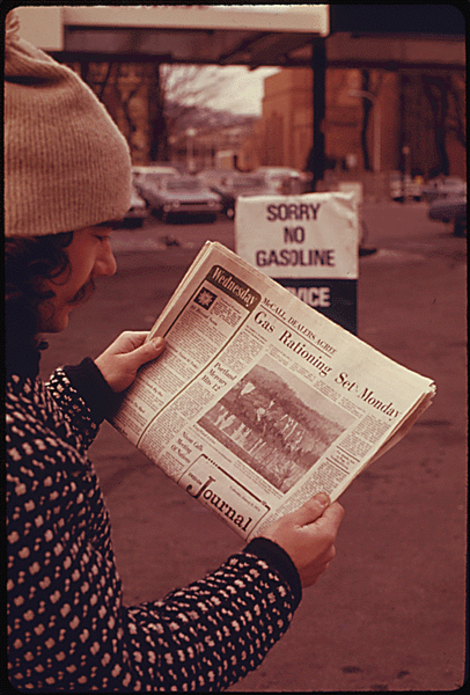
Have
American's forgotten the gas shortages and long lines at
their gas stations to get gas during the Arab Oil Embargo of 1973?
"Apparently
so." Mr. Goodell states that "in 1973, America was 'addicted' and
'over the barrel' of foreign oil to the amount of 40%. Forty percent of our
energy 'needs' in 1973 came from countries - many of which didn't like us then,
and I'm afraid, many of them still don't. The difference between 1973 and today
- is that today we receive 50% MORE foreign oil now than we did in 1973. And now
we know about the problems relating to greenhouse
gas emissions that we didn't know then. America needs to change course, and
change course now, in terms of its' energy supplies and how we keep America's
economy strong, without the threat of being held hostage to a middle-east tyrant
or regime, that could once again, turn on us, and turn off our supply of foreign
oil."
Remember
????
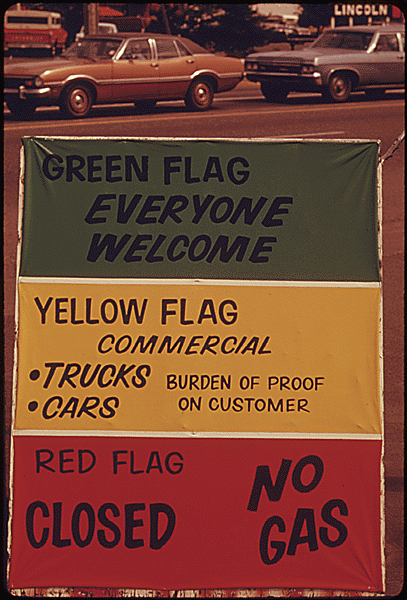
"Sadly,
most Americans have forgotten the long lines of people waiting in their cars -
lined up and waiting for gasoline at their nearby gas station, with lines that
were many blocks long. And, after waiting 4-5 hours, many even waiting overnight
in many places, to finally take their turn to fill up their car with gasoline,
only to find that the gas station had run out of gas."
"Let
me Repeat.... That was 1973 when we imported 40% of our daily energy
requirements in the form of crude oil from overseas, and from foreign countries
- and many of these from countries that don't like us.
Today,
over 35 years later, America has yet to learn the lesson. We cannot continue our
reliance on energy from foreign countries that supply us with 60% of the crude
oil that our refineries use as a feedstock for producing gasoline and diesel
fuel for our cars and trucks comes from overseas.
America
is "over the barrel" and it's not our barrel, but the barrels of oil
that we are addicted by and owned by other countries. Why have we not learned
the lessons we needed to learn in 1973 when we were cut-off from the vital
energy supplies we need?
Countries
like China, are growing rapidly, and have an insatiable need for crude oil.
China, with their booming economy, is increasingly growing in its clout and
control over international supplies of crude oil - whether they do this through
their ability to buy as much oil as they need on a daily basis, or whether they
simply but American drilling rigs, technology, and explore and produce oil and
gas from their own fields. China, is buying large amounts of oil for their
country, and causing upward pricing on declining supplies. What happens if
Russia, with all of their oil and natural gas, along with China and Venezuela,
with or without the help of OPEC, decided to NOT sell oil to us????
To
be sure, greenhouse gas
emissions are a problem, and to some, greenhouse
gas emissions are also a Clear
and Present Danger, but not to the extent that it presents an imminent Clear
and Present Danger.
America's
reliance for 60% of our energy "needs" coming from foreign suppliers
is un-acceptable.
The
"driver" to get America to begin reducing and eliminating fossil fuel
use should be our nation's national security and the welfare and safety of its
citizens. And this can all begin with developing and investing in our own renewable
energy resources and renewable
energy technologies, let's start by putting solar on every rooftop that has
a clear and unobstructed view of the Southern sky. See www.RooftopPV.com
or www.DistributedPV.com for more
information. Let's create incentives begin with adopting a national "Feed
In Tariff" as Germany did in 1990.
America,
we simply do NOT have the luxury of time on our hands. We need to end our
dependence and reliance on foreign fossil fuels, especially from countries that
don't like us! We need to rapidly begin expanding renewable
energy resources and renewable
energy technologies from our vast and abundant renewable energy resources,
such as; solar, solar energy systems, solar cogeneration, solar trigeneration,
"solar on every roof," waste to energy, waste to fuel, biomass
gasification, B100 Biodiesel, Biomethane, Synthesis Gas, geothermal, E100
Ethanol (from sugar cane and NOT from corn), and wind, where it makes economic
sense."
For
more information, call/email:
info@MoltenSaltReactors.com
____________________________________________________
Drill Baby Drill!
www.DrillBabyDrill.com
No Foreign Oil
www.NoForeignOil.com
No Foreign Oil
Support
Domestic Oil and Gas
Production!
___________________________________________________
“spending
hundreds and hundreds and hundreds of billions of dollars every year for oil,
much of it from the Middle East, is just about the single stupidest thing that
modern society could possibly do. It’s very difficult to think of anything
more idiotic than that.”
~ R. James Woolsey, Jr., former
Director of the CIA
________________________________________________________
Our Products
and Services Include:
Backup
Power Supply * CHP Systems
* Cogeneration
* Demand
Side Management * Diesel
Generating Set
Diesel
Generating Sets
* Diesel
Generator Sets * Diesel
Generator Sets *
Diesel
Generator Sales *
Diesel
Gensets
Diesel
to Natural Gas
* Emergency
Power Generators *
Emissions
Abatement
* Energy
Master Planning
Engine
Generator Sets
* Engine
Sales and Service
* Fuel
Switching * Gas
Gensets
Generator
Sales and Service * Generators
for Rent *
Natural
Gas Gensets * Onsite
Power Generation * Trigeneration
______________________________________________________
What is a "Durable
Competitive Advantage?"
A
durable
competitive advantage is also referred to as a "strategic
competitive advantage," however similar, they are different. The
two differ in that a company with a durable
competitive advantage can go on indefinitely. Companies that have a durable
competitive advantage include Coca-Cola and Hershey's. The term
"durable
competitive advantage" has been
popularized by "the Oracle of Omaha," Warren Buffet the Founder and
Chairman of Berkshire Hathaway as the single-most important asset a company must
before his company will make the investment or acquisition.
What is a Private
Placement Memorandum?
Private
Placement Memorandums (PPM) are confidential sales documents that
is provided to a potential sophisticated investor for a private placement of
bonds. The PPM contains relevant information about the financial, economic and
demographic characteristics of the borrower and its service area.
More specifically, Private
Placement Memorandums provide the investor, in the format of a
structured document, the information and data the investor needs to know to make
an informed investment decision, including:
* The Private
Placement Memorandum's offering format and structure
* The company information and structure of the company
* SEC required disclosures about the securities being purchased
* Information related to the company's business and operations
* Risks involved with the investment
* Senior Management and Company Financials
* Use of proceeds
Private
Placement Memorandums also includes the subscription agreement
which is the actual "sales contract" for purchasing the securities.
The PPM is the document that the investor will sign and send in with his/her
investment funds
What is a Regulation
D Offering?
Regulation D, also known as "Reg D," became effective April 15, 1982.
It's one the key SEC exemptions for small businesses that want to raise money by
selling its stock. It's also considered a route to taking a company public
without the burden and expense of a full registration with the SEC.
Regulation D consists of six basic rules. The first three are concerned with
definitions, conditions, and notification. Rule 501 covers the definitions of
the various terms used in the rules. Rule 502 sets forth the conditions,
limitations, and information requirements for the exemptions in rules 504, 505,
and 506. Rule 503 contains the SEC notification requirements. The last three
rules deal with the specifics of raising money. Rule 504 generally pertains to
securities sales up to $1 million. Rule 505 applies to offerings up to $5
million (including those offerings less than $1,000,000). Rule 506 is for
securities offerings with no limit or any dollar amount (including those
offerings less than $5,000,000 million).
Regulation
D Offerings Continued
Under the Securities Act of 1933, any offer to sell securities must either be
registered with the SEC or meet an exemption. Regulation D (or Reg D) provides
three exemptions from the registration requirements, allowing some smaller
companies to offer and sell their securities without having to register the
securities with the SEC. For more information about these exemptions, read our
publications on Rules 504, 505, and 506 of Regulation D.
While companies using a Reg D exemption do not have to register their securities
and usually do not have to file reports with the SEC, they must file what’s
known as a "Form D" after they first sell their securities. Form D is
a brief notice that includes the names and addresses of the company’s owners
and stock promoters, but contains little other information about the company.
Rule 504 of Regulation D
Rule 504 of Regulation D provides an exemption from the registration
requirements of the federal securities laws for some companies when they offer
and sell up to $1,000,000 of their securities in any 12-month period.
A company can use this exemption so long as it is not a blank check company and
does not have to file reports under the Securities Exchange Act of 1934. Also,
the exemption generally does not allow companies to solicit or advertise their
securities to the public, and purchasers receive "restricted"
securities, meaning that they may not sell the securities without registration
or an applicable exemption.
Rule 504 does allow companies to make a public offering of freely tradable
securities but only if one of the following circumstances is met:
The company registers the offering exclusively in one or more states that
require a publicly filed registration statement and delivery of a substantive
disclosure document to investors;
A company registers and sells the offering in a state that requires registration
and disclosure delivery and also sells in a state without those requirements, so
long as the company delivers the disclosure documents required by the state
where the company registered the offering to all purchasers (including those in
the state that has no such requirements); or
The company sells exclusively according to state law exemptions that permit
general solicitation and advertising, so long as the company sells only to
"accredited investors."
Even if a company makes a private sale where there are no specific disclosure
delivery requirements, a company should take care to provide sufficient
information to investors to avoid violating the antifraud provisions of the
securities laws. This means that any information a company provides to investors
must be free from false or misleading statements. Similarly, a company should
not exclude any information if the omission makes what is provided to investors
false or misleading.
While companies using the Rule 504 exemption do not have to register their
securities and usually do not have to file reports with the SEC, they must file
what is known as a "Form D" after they first sell their securities.
Form D is a brief notice that includes the names and addresses of the
company’s owners and stock promoters, but contains little other information
about the company.
Rule 505 of Regulation D
Rule 505 of Regulation D allows some companies offering their securities to have
those securities exempted from the registration requirements of the federal
securities laws. To qualify for this exemption, a company:
Can only offer and sell up to $5 million of its securities in any 12-month
period;
May sell to an unlimited number of "accredited investors" and up to 35
other persons who do not need to satisfy the sophistication or wealth standards
associated with other exemptions;
Must inform purchasers that they receive "restricted" securities,
meaning that the securities cannot be sold for at least a year without
registering them; and
Cannot use general solicitation or advertising to sell the securities.
Rule 505 allows companies to decide what information to give to accredited
investors, so long as it does not violate the antifraud prohibitions of the
federal securities laws. But companies must give non-accredited investors
disclosure documents that generally are the same as those used in registered
offerings. If a company provides information to accredited investors, it must
make this information available to non-accredited investors as well. The company
must also be available to answer questions by prospective purchasers.
Here are some specifics about the financial statement requirements applicable to
this type of offering:
Financial statements need to be certified by an independent public accountant;
If a company other than a limited partnership cannot obtain audited financial
statements without unreasonable effort or expense, only the company's balance
sheet (to be dated within 120 days of the start of the offering) must be
audited; and
Limited partnerships unable to obtain required financial statements without
unreasonable effort or expense may furnish audited financial statements prepared
under the federal income tax laws.
While companies using the Rule 505 exemption do not have to register their
securities and usually do not have to file reports with the SEC, they must file
what is known as a "Form D" after they first sell their securities.
Form D is a brief notice that includes the names and addresses of the
company’s owners and stock promoters, but contains little other information
about the company.
Rule 506 of Regulation D
Rule 506 of Regulation D is considered a "safe harbor" for the private
offering exemption of Section 4(2) of the Securities Act. Companies using the
Rule 506 exemption can raise an unlimited amount of money. A company can be
assured it is within the Section 4(2) exemption by satisfying the following
standards:
The company cannot use general solicitation or advertising to market the
securities;
The company may sell its securities to an unlimited number of "accredited
investors" and up to 35 other purchases. Unlike Rule 505, all
non-accredited investors, either alone or with a purchaser representative, must
be sophisticated—that is, they must have sufficient knowledge and experience
in financial and business matters to make them capable of evaluating the merits
and risks of the prospective investment;
Companies must decide what information to give to accredited investors, so long
as it does not violate the antifraud prohibitions of the federal securities
laws. But companies must give non-accredited investors disclosure documents that
are generally the same as those used in registered offerings. If a company
provides information to accredited investors, it must make this information
available to non-accredited investors as well;
The company must be available to answer questions by prospective purchasers;
Financial statement requirements are the same as for Rule 505; and
Purchasers receive "restricted" securities, meaning that the
securities cannot be sold for at least a year without registering them. While
companies using the Rule 506 exemption do not have to register their securities
and usually do not have to file reports with the SEC, they must file what is
known as a "Form D" after they first sell their securities. Form D is
a brief notice that includes the names and addresses of the company’s owners
and stock promoters, but contains little other information about the company.
What is an Initial
Public Offering?
An
"Initial
Public Offering" or "IPO" is the first sale of
stock by a company to the public.
The
purpose of an Initial
Public Offering is to generate capital for a business that
decides to take the route of equity financing.
What is Equity Financing?
Companies seek "equity financing" when a company uses its
assets or ownership in the company to get cash they need for expansion
or continued growth.
When
a company sells its stock through an Initial
Public Offering it is, in essence, selling partial ownership
in the company.
One
downside to this type of financing is that the company loses some of its
control when shares are sold to the public.
In
order to complete a successful Initial
Public Offering, an "underwriter" is used to
facilitate the process as well as to promote the company's stock to
investors and eventually to the public. Another term for an underwriter
is an investment bank.
What is a Strategic
Competitive Advantage?
A
company with a strategic competitive advantage consistently outperforms their
competition through its strategic competitive advantage(s) which is that
company's unique value proposition wherein it produces better products or
services than anyone else.
___________________________________________________
Are
you doing your part to prevent Climate Change and End America's
Reliance on Foreign Energy?
Our following
EcoGeneration
technologies,
including our
Biomethane,
B100
Biodiesel and
Synthesis Gas Fuels
Generated from our "Waste to Fuel"
technologies are Carbon Free Energy
and Pollution Free Power
solutions that will:
* forever change the way energy is generated and used.
*
eliminate or greatly reduce our customer's electric demand charges and electric
expenses.
* slow, stop and eventually reverse climate change by reducing and then
eliminating anthropogenic
greenhouse
gas emissions
- of which
carbon
dioxide emissions
makes up 80% of all greenhouse
gas emissions.
* reduce and eventually eliminate the use of coal and other fossil fuels.
*
reduce the need for inefficient and expensive central power plants owned by
utility companies.
* promote energy independence.
*
end America's dependence on oil from OPEC and other countries in the
Middle-East, Venezuela and end our need for importing natural gas from Russia.
American
Energy Plan
www.AmericanEnergyPlan.com
Anaerobic Digester
www.AnaerobicDigester.com
Anaerobic Digesters
www.AnaerobicDigesters.com
B100 Biodiesel
www.B100Biodiesel.com
Battery
Energy Storage
www.BatteryEnergyStorage.com
Biomass
Gasification
www.BiomassGasification.com
Biomethane
www.Biomethane.com
Carbon
Dioxide Emissions
www.CarbonDioxideEmissions.com
Carbon Emissions
www.CarbonEmissions.com
Carbon Free Energy
www.CarbonFreeEnergy.com
Clean Power Generation
www.CleanPowerGeneration.com
Cogeneration
www.Cogeneration.net
Concentrating
Solar Power
www.ConcentratingSolarPower.com
Distributed
PV
www.DistributedPV.com
Distributed
Solar Generation
www.DistributedSolarGeneration.com
EcoGeneration
www.EcoGeneration.com
Energy Investment Banking
www.EnergyInvestmentBanking.com
Greenhouse Gas Emissions
www.GreenhouseGasEmissions.com
Net
Zero Energy
www.NetZeroEnergy.com
Net
Zero Energy Building
www.NetZeroEnergyBuilding.com
No
Foreign Oil
www.NoForeignOil.com
Plug
In Electric Vehicles
www.PlugInElectricVehicles.com
Pollution
Free Power
www.PollutionFreePower.com
Rooftop
PV
www.RooftopPV.com
Solar Energy Systems
www.SolarEnergySystems.net
Solar Power Parks
www.SolarPowerParks.com
Solar Cogeneration
www.SolarCogeneration.com
Solar Trigeneration
www.SolarTrigeneration.com
Synthesis Gas
www.SynthesisGas.com
Trigeneration
www.Trigeneration.com
Waste Heat Recovery
www.WasteHeatRecovery.com
Waste to Energy
www.WasteToEnergy.net
Waste
To Fuel
www.WasteToFuel.com
Wind
Power Generation
www.WindPowerGeneration.com
Zero Emission Energy
www.ZeroEmissionEnergy.com
Zero Emission Power
www.ZeroEmissionPower.com
______________________________________________________
We
support the Renewable Energy
Institute by donating a portion of our profits to the
Renewable Energy
Institute in their efforts to reduce fossil fuel use through
renewable energy and their goals to end fossil fuel pollution by
reducing/eliminating Carbon Emissions,
Carbon Dioxide Emissions and
Greenhouse Gas Emissions.
The
Renewable Energy
Institute
is "Changing The Way The World Makes
and Uses Energy by
Providing Research & Development, Funding and Resources That Creates
Sustainable Energy via 'Carbon Free
Energy,' 'Clean
Power Generation' and 'Pollution Free
Power' Through
Expanding the use of Renewable Energy
Technologies."


www.RenewableEnergyInstitute.org
Email:
info(@)Renewable Energy Institute (.)org
The information contained on this site is
copyright protected and
cannot be
reproduced in any form or manner without our consent.
Molten Salt Reactors
www.MoltenSaltReactors.com
Molten Salt
Reactors
info@MoltenSaltReactors.com
Copyright
© 2010
All Rights Reserved